

Lifeline – 21 years of setting calves and lambs up to succeed
Some things stand the test of time. For over two decades, Lifeline has helped give calves and lambs the best possible start in life by supporting the dam’s nutritional needs in those crucial months leading up to their birth.
It was 21 years ago that Uniblock set out to answer an important question: could nutrition pre-calving and pre-lambing do more than simply supply minerals to the cow and ewe?
Uniblock came up with the solution in its range of Lifeline products, created on the principle that good nutrition before birth should benefit both the mother and her offspring.
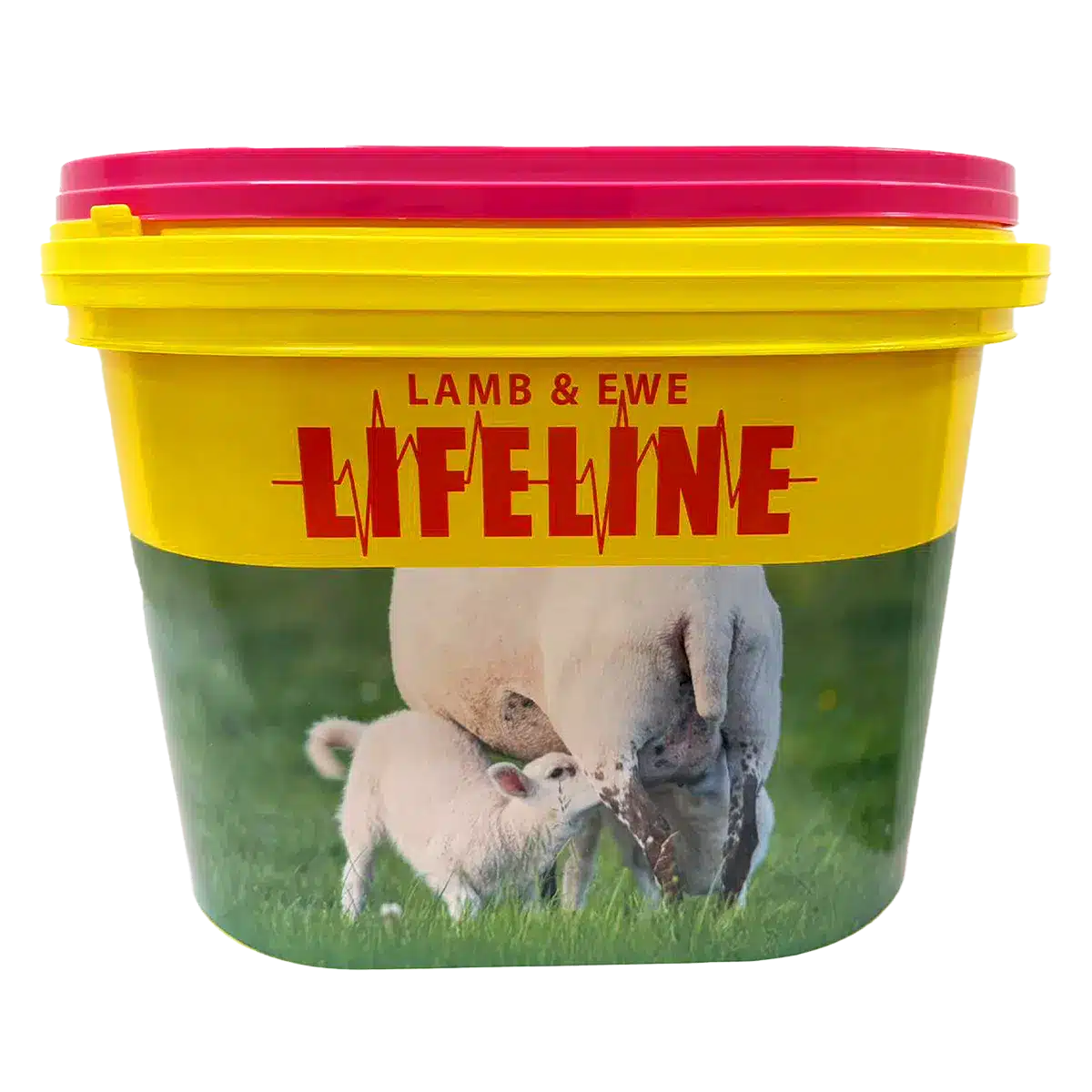
With the development of Lifeline Pre-Calver and Lifeline Lamb & Ewe came a different approach to supplementation. These products were formulated to not only consider the needs of a cow or ewe but the important role minerals play in the start given to their newborns.
The foundations of Lifeline were built on research conducted at SAC (Scottish Agricultural College), which demonstrated a 25% increase in average colostrum IgG concentrations in ewes receiving Lifeline compared with those receiving standard feed licks.
In the trial, ewes supplemented with Lifeline produced colostrum containing an average of 228.5 units of IgG/ml, compared with 182.9 units/ml in the standard lick group.
This early research helped establish the principle behind the Lifeline range: that targeted nutrition before birth can play an important role in supporting colostrum quality and the transfer of maternal antibodies to newborn animals (Table 1).
Table 1. Effect of Lifeline on IgG levels in ewe colostrum
| Treatment | Number of ewes | Average IgG units per ml of colostrum | Difference | S.E.D. | Probability of result being due to chance |
| Ewes fed silage, grass and Lifeline feed licks | 100 | 228.5 | 25% | 16.79 | <1% |
| Ewes fed silage, grass and standard feed licks | 100 | 182.9 |
Building on this research, Uniblock patented the Lifeline technology for its ability to improve colostrum quality and support the transfer of maternal antibodies to newborn animals.
The significance of colostrum is now better understood than ever, how critically important it is in those first hours of life.
So too is how the mother’s nutrition before she gives birth can have a lasting effect on the health and performance of her offspring.
Whether for cattle or sheep, the Lifeline products have been designed with the same principle in mind
Lifeline Pre-Calver, fed at the recommended rate of 150g/cow/day during the final six to eight weeks before calving, is designed to support the cow through the transition period while helping to improve colostrum quality. Its comprehensive package of carefully selected minerals and vitamins supports immunity and the nutritional requirements of the cow in the run-up to calving.
Lifeline Lamb & Ewe follows the same principle, combining protected energy and protein with targeted minerals and ingredients to support colostrum quality and lamb vitality. It is fed during the final six to eight weeks before lambing, at 100g/ewe/day for outdoor lambing and 150g/ewe/day for indoor lambing.

Investing in the next generation of livestock has always been important. However, as the value of individual animals has increased, so too has the financial significance of getting the early stages right. A look at the change in livestock values over the past 21 years puts this into perspective.
This is stunningly evident in a snapshot of those values:
In 2005, the average Irish R3 steer price was €2.63/kg. By 2026, an R3 steer changes hands at an average of €6.72/kg.
Between 2000 and 2008, Irish data shows that beef-bred calves were being sold for an average of €157 and by March 2026, a farmer with a Charolais bull calf aged between 21 and 42 days can expect to achieve an average of €642.
Applied to a finished beef animal achieving a carcass weight of 350kg, what was worth approximately €920 in 2005 is now valued at €2,352 in 2026, an increase of around 156%.
Sheep values have demonstrated equally significant shifts.
In 2005, the average Irish lamb price was approximately €3.38/kg, valuing a 21.4kg carcass at around €72.40. In 2026, that price per kilogramme is about €7.85, meaning a lamb with the same carcass weight is worth around €168, an increase of approximately 132%.
The value of getting the early stages right has never been greater. Whether it is a beef animal worth more than €2,300 or a finished lamb approaching €170, every newborn represents a significant investment in the future of the farm.
Good nutrition before birth, the production of quality colostrum and a strong start in those first hours and days all contribute to laying the foundations for future health and performance.
When Lifeline was developed 21 years ago, this was the principle at its heart. Today, despite advances in nutritional knowledge, production systems and livestock values, that principle remains unchanged.
Every calf and every lamb deserves the best possible start in life.
Thank you to the farmers, merchants and nutritionists who have supported the Lifeline range over the past 21 years. We look forward to continuing that journey together for many years to come.

Share Post:


